Thyroid Centre
Offering the latest in minimal
access thyroid treatments
Thyroid Centre specialises in non-surgical, minimal-access, image-guided thyroid treatments. Our minimally invasive approach focuses on preserving thyroid function, enabling faster recovery and offering expert care tailored to each patient.
Thyroid services we offer
-
Thyroid
Assessment -
Thyroid
Radiofrequency Ablation -
Thyroid
Ethanol Ablation
Thyroid-related services/treatments we offer:
A detailed history is the first step in any assessment to determine the need and if relevant the suitability for various thyroid treatments. It is an opportunity for patients to ask questions and understand all their options, their advantages and limitations.
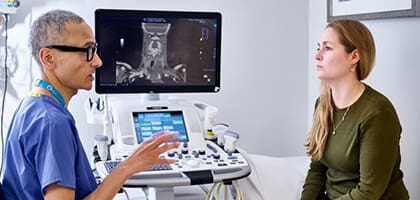
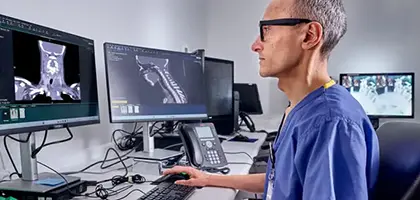
An ultrasound of the neck is the single most important imaging investigation. It allows an accurate assessment of the gland, grading of nodules and assessing size and suitability for the various treatment options
Thyroid-related services/treatments we offer:
Thyroid Radiofrequency Ablation (RFA) is a minimally invasive treatment supported by NICE guidance (the National Institute for Health and Care Excellence) since 2016. RFA is most commonly performed under local anaesthetic as a day-case procedure. It is the most widely available ablative technique. Insertion of an RFA needle generates heat in the tissue and over time shrinks the nodule. Generally RFA achieves volume shrinkage anywhere between 50% to 90% with a single treatment.
Thyroid-related services/treatments we offer:
Ethanol (or alcohol) ablation is a much more simple and quicker technique than RFA or microwave ablation. It is reserved for nodules that are entirely or mainly fluid-filled (cystic). The fluid content of the nodule is aspirated with a needle under local anaesthetic and alcohol is injected into the cyst.
The Process
At Thyroid Centre we offer specialist advice on minimally invasive treatment options for thyroid nodules, delivered by a consultant interventional radiologist with expertise in image-guided therapies.
Get in Touch
If you have any questions about your thyroid condition or would like to explore non-surgical treatment options, we’re here to help.
Initial Consultation
At your consultation we can discuss your diagnosis, review any imaging and test results and give an opinion on whether ablative treatments may be suitable for you.
Tailored Treatment
Individualized care, delivering evidence-based treatments to manage nodule symptoms.
Recovery & Follow Up
Fast recovery. Structured follow up and outcome monitoring.
Your thyroid questions answered...
Learn more about the thyroid gland, thyroid nodules and minimal-access treatment options here.
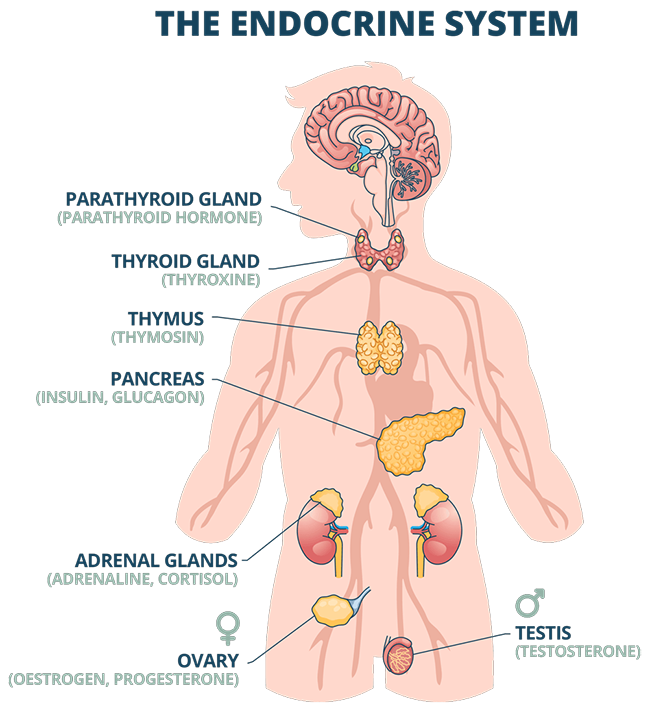
The thyroid gland is one of several endocrine organs that work together as the endocrine system. Endocrine organs help regulate wide ranging bodily functions and are characterized by their ability to release hormones in response to signals from the brain and their local environment. Hormones are chemical messengers carried in the blood to produce an effect elsewhere in the body by acting on other organs and tissues.
At a microscopic or cellular level the thyroid gland consists of numerous small sacs (called follicles). These sacs are containers for a gel -like protein called colloid. Colloid stores another protein called thyroglobulin (the thyroid hormone building block or pre-cursor). This is the raw material from which the gland produces thyroid hormones.
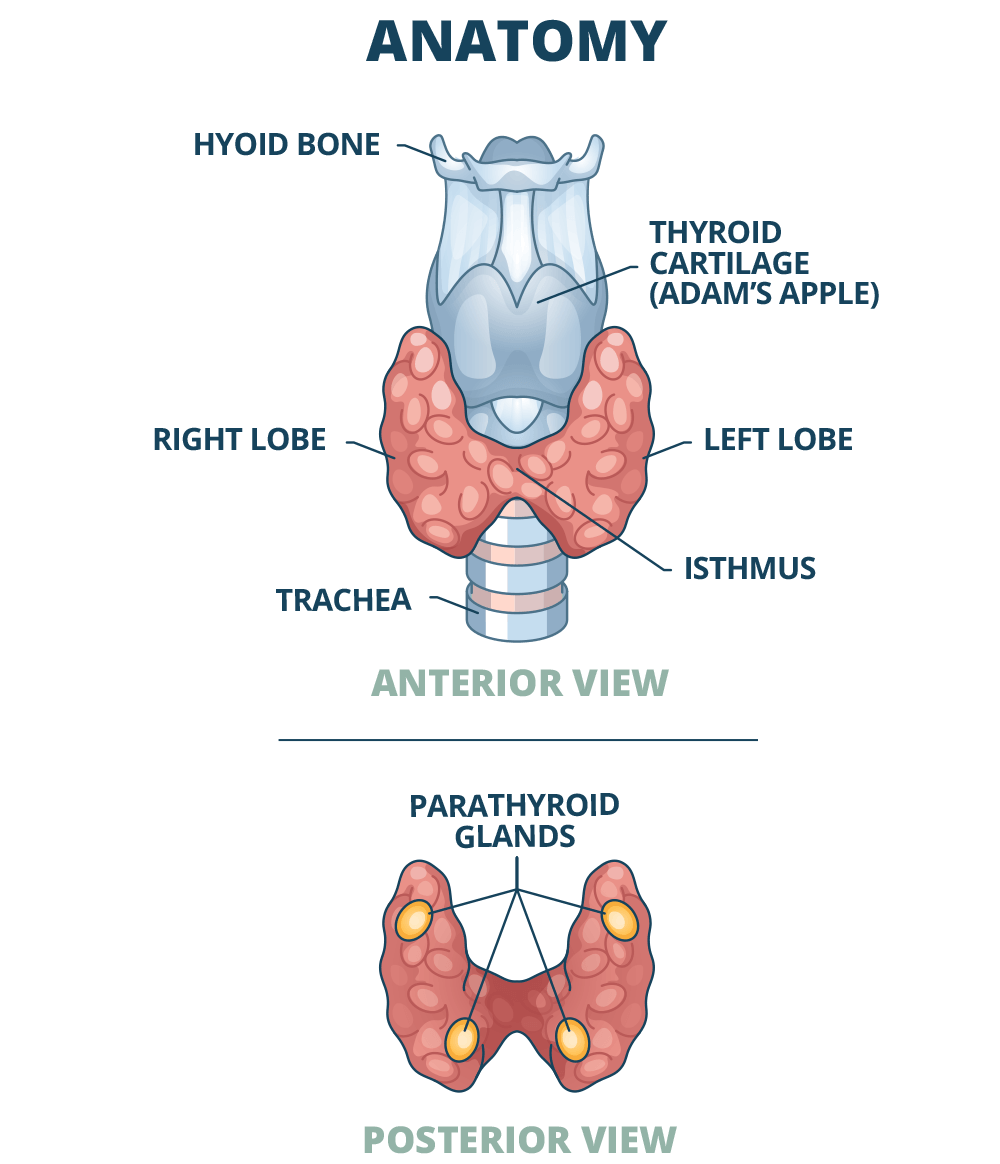
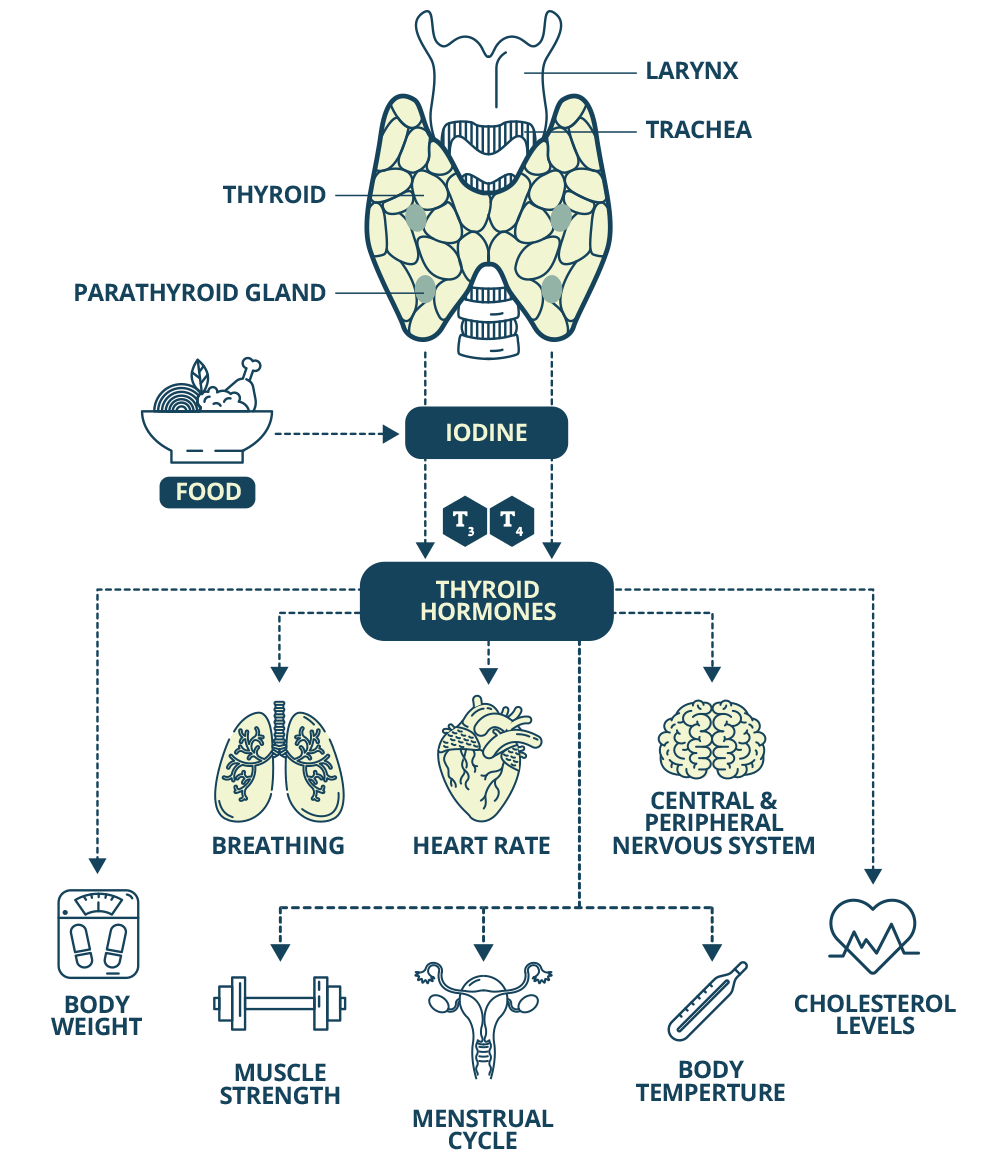
The thyroid gland sits in contact with or close to many sensitive structures in the neck. Between the trachea and each thyroid lobe lies the recurrent laryngeal nerve which supplies the voice box (vocal cords). The large neck vessels (carotid artery and jugular vein) run along the outer (lateral) edge of each lobe. Underlying the thyroid gland are the tiny parathyroid glands (two on each side). The parathyroid glands are the main regulators of body calcium.
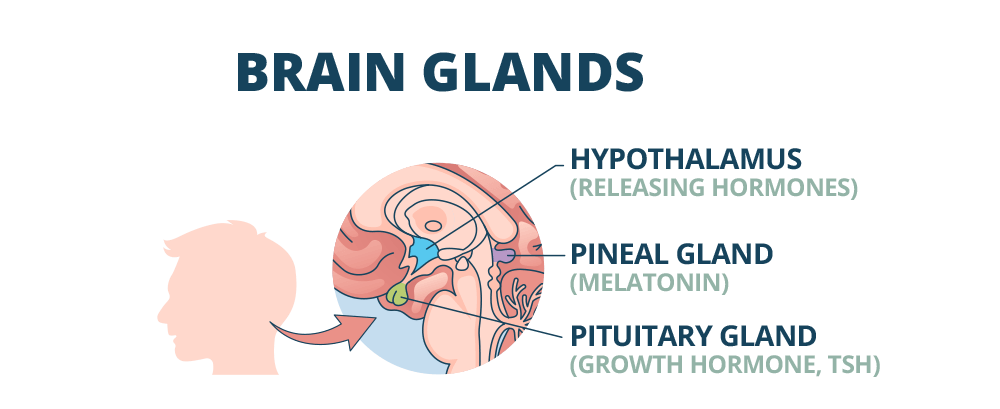
The trigger or stimulus for thyroid hormone release comes from the brain. The hypothalamus (a small but vital gland in the brain which regulates many bodily functions) releases thyroid-releasing hormone (TRH) mainly in response to lower levels of thyroid hormone in the blood as well as several other factors.
TRH acts on the nearby pituitary gland in the brain which in turn releases thyroid-stimulating hormone (TSH). TSH travels in the blood to act on the thyroid gland. The thyroid gland responds by absorbing iodine from the blood stream and combining it with the hormone pre-cursor thyroglobulin contained in the thyroid follicles. This is why a lack of dietary iodine in some parts of the world is related to larger thyroid glands, as the thyroid enlarges to absorb more iodine to make sufficient thyroid hormone.
Two types of hormone are produced. The thyroid gland produces around 80% to 90% “T4” (thyroxine) and only a small amount of “T3” (triiodothyronine). T4 is a long-lasting storage form of hormone and T3 is the more active form of hormone. Thyroid hormones travel to and affect almost every cell in the body to regulate functions such as the cardiovascular function, nervous system, liver function, growth and reproduction. Many other organs can convert T4 (the less active form of thyroid hormone) to active T3 such as the liver, kidneys, heart and brain for local use. Broadly speaking thyroid hormones plays a key role in metabolism, how effectively the body uses energy and repairs tissue.
Finally, when the hypothalamus detects sufficient or excessive hormone in the blood, thyroid releasing hormone (TRH) production and thyroid stimulating hormone (TSH) levels are reduced or stopped to maintain thyroid hormone in a normal range. This process of maintaining balance is called homeostasis. In the presence of any condition causing excess thyroid hormone production (hyperthyroidism) this system is switched off (detected in the blood as abnormally low or suppressed TSH levels). If the thyroid gland cannot produce sufficient hormone or is removed, thyroid hormone supplementation is required to maintain vital bodily functions. Persistent low thyroid function (hypothyroidism) is characterized by abnormally high levels of TSH if left untreated.
Thyroid nodules are lumps or growths of abnormal thyroid tissue that develop within the gland. A gland enlarged by a nodule can be called a goitre and a gland containing multiple nodules, a multi-nodular goitre. Thyroid nodules can vary widely in size and appearance. Some may be so small that they are only noticeable with an ultrasound examination and others can be large enough to extend in the chest and compress surrounding structures. Nodules can range from being completely solid, to mixed solid / fluid or entirely fluid (called cystic).
Thyroid nodules are very common with around 50% of people around the age of 60 having one. It is therefore not surprising that anywhere between 15% to upwards of 60% of medical imaging around the neck undertaken for other reasons will also find an incidental thyroid nodule. Evidence suggests that over 6% of women and 1.5% of men have a noticeable nodule (one that is causing symptoms or can be seen or felt). The vast majority of nodules (over 90%) are benign (non-cancerous).
The key investigation to assess the risk of a nodule being cancerous is ultrasound. An expert in ultrasound imaging (normally a consultant radiologist or sonographer) is able to grade nodules and decide which are most likely to be benign (and do not require follow up) and which might require further assessment such as needle testing (fine needle aspiration) and / or follow up scans.
Thyroid radiofrequency ablation (RFA) is a NICE approved method for the treatment of benign thyroid nodules. This means NICE has reviewed the safety data, effectiveness and complications of the procedure and supports the use of RFA provided all appropriate measures to ensure safe and effective treatment are in place.
Thyroid RFA is minimally invasive and thyroid sparing. This means a needle is inserted in the skin without making an incision or scar and it preserves thyroid function. The risk of it causing thyroid underactivity (hypothyroidism) is very low indeed (generally 1% or less). It is used to shrink nodules to help relieve local neck symptoms and improve cosmetic appearance. The nodules are not removed. Thyroid RFA was pioneered over two decades ago in South Korea and has since gained international acceptance as a first line treatment for benign thyroid disease. It is normally performed as a day case procedure and commonly under local anaesthetic alone.
Thyroid ethanol (or alcohol) ablation is a minimally invasive method to treat benign (non-cancerous) cystic nodules in the thyroid gland. Cystic nodules are lumps in the thyroid gland that either entirely or mainly contain fluid. The treatment is very simple and consists of aspirating (emptying or removing) the cyst fluid with a very fine needle and then injecting alcohol. The ethanol is then either retained in the cyst or removed after a few minutes. The procedure is normally used after simple aspiration of fluid from a nodule without ethanol injection is ineffective.
Decisions regarding cancer treatments are important and complex and as such are undertaken within multi-disciplinary teams (MDTs). MDTs bring together doctors and nurses and other supporting healthcare workers who specialise on a daily basis in thyroid cancer care and work together with patients to support them in understanding and making treatment decisions. Specialty groups working together in the MDT include thyroid surgeons, endocrinologists, oncologists, pathologists, and radiologists.
There is currently no established role for minimally invasive image guided techniques for cancer treatment in the UK. Internationally there is a growing interest in researching the role of thyroid ablation in treating very small (less than 1 to 2 cm) low-risk papillary thyroid cancers (PTCs). PTCs are the most commonly diagnosed tumours and tend to grow more slowly and spread less commonly than other thyroid cancer types. Small PTCs can be managed with surgery or potentially within ‘active’ surveillance programmes. Further research and investigation is necessary to understand the role of ablation in these patients. A thyroid cancer specialist should be consulted for detailed information on appropriate treatment options in individual cases.
Independent Thyroid Centre Reviews...
Healthcare Partners


"*" indicates required fields